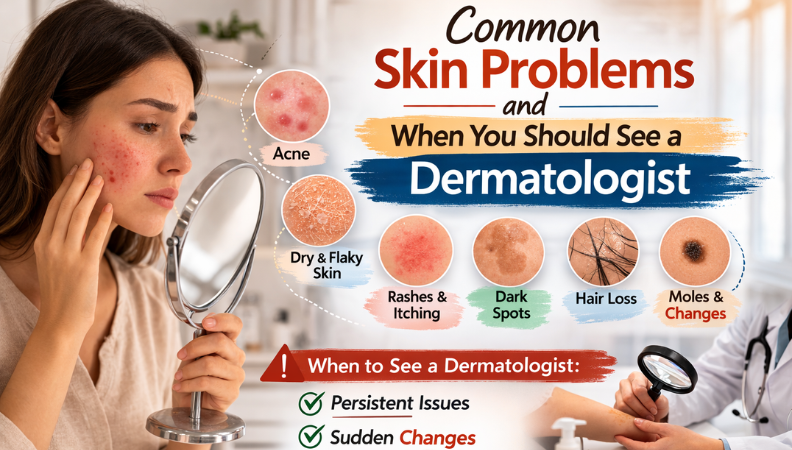
Common Skin Problems and When You Should See a Dermatologist
Your skin is the largest organ of your body and acts as the first line of defense against environmental damage, bacteria, and infections. Because it is constantly exposed to external factors such as sunlight, pollution, allergens, and harsh weather, it is common for people to experience various skin problems throughout their lives.
While many skin conditions are mild and can be treated with over-the-counter remedies, some require professional medical attention. Knowing the difference between minor skin issues and conditions that require a dermatologist’s care can help you protect your skin and prevent complications.
In this article, we’ll explore some of the most common skin problems and explain when it’s time to consult a dermatologist.
1. Acne
Acne is one of the most common skin conditions affecting teenagers and adults alike. It occurs when hair follicles become clogged with oil (sebum), dead skin cells, and bacteria. This leads to the formation of pimples, blackheads, whiteheads, and sometimes painful cysts.
Acne can appear on the face, chest, shoulders, and back. While mild acne can often be managed with proper skincare and non-prescription treatments, severe or persistent acne may require medical treatment.
When to See a Dermatologist
You should consult a dermatologist if:
- Acne is severe or painful
- Over-the-counter treatments are not working
- Acne leaves scars or dark spots
- Breakouts persist into adulthood
Early treatment can prevent long-term scarring and skin damage.
2. Eczema
Eczema, also known as atopic dermatitis, is a condition that causes dry, itchy, inflamed skin. It is commonly seen in children but can affect people of all ages.
Symptoms may include:
- Red or inflamed patches
- Intense itching
- Cracked or scaly skin
- Thickened skin from repeated scratching
Eczema flare-ups are often triggered by allergens, stress, climate changes, or harsh skincare products.
When to See a Dermatologist
Seek medical advice if:
- Symptoms interfere with sleep or daily life
- Skin becomes infected
- Home treatments do not relieve the itching
- The rash spreads or worsens
Dermatologists can prescribe medications and specialized treatments to control flare-ups.
3. Psoriasis
Psoriasis is a chronic autoimmune condition that causes rapid skin cell buildup. This results in thick, scaly patches that may appear red, silvery, or white.
Common areas affected include:
- Scalp
- Elbows
- Knees
- Lower back
Psoriasis can sometimes cause discomfort, itching, and cracking of the skin.
When to See a Dermatologist
Consult a dermatologist if:
- Skin patches become painful or swollen
- The condition spreads across large areas
- It affects your confidence or daily activities
- Over-the-counter creams provide no relief
Proper medical treatment can significantly improve symptoms and prevent flare-ups.
4. Fungal Infections
Fungal infections are caused by microorganisms that thrive in warm and moist environments. Common types include ringworm, athlete’s foot, and yeast infections.
Symptoms may include:
- Circular rashes
- Itching or burning sensation
- Redness and peeling skin
- Cracking between toes or skin folds
These infections are contagious and can spread through direct contact or shared surfaces.
When to See a Dermatologist
Medical attention is recommended if:
- The infection spreads rapidly
- It does not improve after two weeks of treatment
- Pain or swelling develops
- The infection repeatedly returns
Dermatologists can prescribe stronger antifungal medications when necessary.
5. Skin Allergies and Rashes
Skin allergies can occur when the immune system reacts to certain substances such as cosmetics, fragrances, metals, or plants. This reaction often leads to rashes, itching, redness, and swelling.
Common types include contact dermatitis and allergic reactions to skincare products.
When to See a Dermatologist
You should seek professional care if:
- The rash spreads or becomes severe
- Blisters or open sores develop
- Symptoms persist for more than a few days
- The cause of the reaction is unknown
A dermatologist can help identify triggers and recommend appropriate treatment.
6. Suspicious Moles or Skin Growths
Moles and skin growths are usually harmless, but sometimes they can indicate more serious conditions.
Warning signs include:
- Changes in size, shape, or color
- Irregular borders
- Bleeding or itching
- Rapid growth
These changes may be signs of skin cancer or other skin conditions.
When to See a Dermatologist
If you notice unusual changes in a mole or new skin growths, it is important to have them examined promptly. Early detection plays a crucial role in successful treatment.
How to Keep Your Skin Healthy
Maintaining good skincare habits can help prevent many common skin problems.
Healthy practices include:
- Cleansing the skin gently twice a day
- Using sunscreen daily
- Staying hydrated
- Eating a balanced diet
- Avoiding harsh skincare products
- Managing stress levels
Regular skin checkups can also help detect potential problems early.
Interactive FAQs About Common Skin Problems
1. What is the most common skin condition?
Acne is one of the most common skin conditions worldwide, affecting people of all ages, especially teenagers and young adults.
2. Can stress cause skin problems?
Yes. Stress can trigger or worsen several skin conditions such as acne, eczema, psoriasis, and hives.
3. How do I know if a skin rash is serious?
A rash may be serious if it spreads quickly, causes severe pain, forms blisters, or does not improve within a few days.
4. Are over-the-counter treatments safe for skin problems?
Many mild skin issues can be treated with over-the-counter products, but persistent or worsening conditions should be evaluated by a dermatologist.
5. How often should I see a dermatologist?
Most people should have a skin check once a year, especially if they have a history of skin conditions, allergies, or unusual moles.
Final Thoughts
Skin problems are common and can affect people of all ages. While many conditions are mild and manageable, others may require professional treatment. Paying attention to changes in your skin and seeking medical advice when needed can help prevent complications and maintain healthy skin.
If a skin condition persists, worsens, or causes discomfort, consulting a dermatologist is always the best step toward proper diagnosis and effective treatment.